Daddy's Christmas Angel

Wednesday, April 30, 2014

"Z" is for Zion National Park

Zion National Park, established in 1919, was the first of Utah's five National Parks. According to the National Park Service site, the people there 12,000 years ago hunted mammoths, giant sloths, and camels. Then by about 8,000 years ago, over-hunting and climate change caused those animals to die out. The people then focused on hunting smaller animals and gathering food. The Zion elevations, 3,666 to 8,726 feet, proved ideal for growing certain crops. Mormon pioneer settlers arrived there in 1856 and endured the hardship of flash floods and drought.

ZION 14581
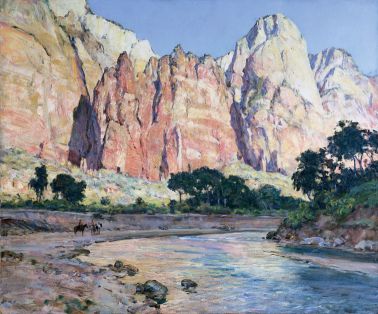
Howard Russell Butler
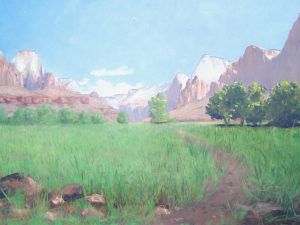
"Zion Canyon", 1903, by Frederick S. Dellenbaugh, 1903 Oil on canvas, Zion Museum Collection ZION 38105
Frederick Samuel Dellenbaugh
The dramatic scenery of the 15-mile long Zion Canyon cut along the north folk of the Virgin River has inspired numerous artists, including Howard Russell Butler and Frederick Samuel Dellenbaugh. How fortunate that artists visited this National Park and inspired us with their depictions of the unforgettable scenery. The museum at Zion National Park houses some of this work.

"Mountains of the Sun" by Howard Russell Butler, 1926
Zion Museum Collection ZION 14586  

Howard Russell Butler

Tuesday, April 29, 2014

"Y" is for Yellowstone and Yosemite National Parks

"In Yellowstone" ©Mary Montague Sikes
Yellowstone National Park. Yosemite National Park. For me, both of these expansive and beautiful parks are intriguing.

We've visited Yellowstone which was established in 1872 as America's first National Park. Home of the most geysers in all the world, the park is worth a trip there just to view these scenic natural phenomena.

When we flew into Sacramento CA a couple of years ago, we had planned to drive down and take Highway 120 through the park. Although it was early June, the road was closed due to snow. The park alert shows the road is closed now, but expected to open sometime in May. We were disappointed and hope to return to the area and actually visit Yosemite.

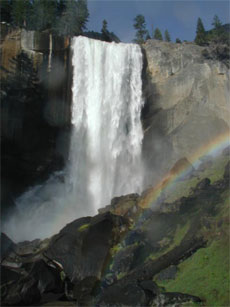
Vernal Fall and rainbow
"Vernal Fall" National Park Service Photo
Known for its waterfalls, Yosemite was first protected as long ago as 1864. The park encompasses 1200 square miles and in photographs appears much more rugged than Yellowstone.

Yosemite National Park is definitely on my list of places to visit. Yellowstone is on the list of National Parks to revisit.

Monday, April 28, 2014

"X" is for the X-Factor in National Parks

"Yellowstone - Where the Buffalo Roam" ©Mary Montague Sikes
Since there are no "X" National Parks, I started to wonder what the "X-Factor" might be in the creation of those parks. Our nation was very fortunate that President Thomas Jefferson sent out the Lewis and Clark Expedition to explore the western territories in 1804.

Then I think of John Muir, the naturalist who walked from Indiana to Florida and eventually explored California by foot. Co-founder of the Sierra Club, Muir was instrumental in establishment of the Sequoia, Grand Canyon, and Yosemite National Parks. In 1903, he went on a three-night camping trip with President Theodore Roosevelt and is said to have influenced his conservation interests. Roosevelt, of course, was a huge champion of the National Parks.

I think also of the great photographer, Ansel Adams, whose iconic photographs of scenes from Yosemite and Yellowstone National Parks depict nature in a unique and unforgettable fashion. Interesting that he was injured during the San Francisco earthquake of 1906. When he was thrown against a garden wall during an aftershock, his nose was broken and never properly repaired. He spent time in New Mexico with one of my favorite artists, Georgia O'Keeffe. He, too, was a great conservationist as well as an explorer of nature and the environment.

The X-Factor for the National Parks is the glory of exploration. Americans love to explore. Thankfully, we also have conserved these beautiful lands that became our National Parks.

                                                                                                          

Sunday, April 27, 2014

"W" is for Wind Cave National Park

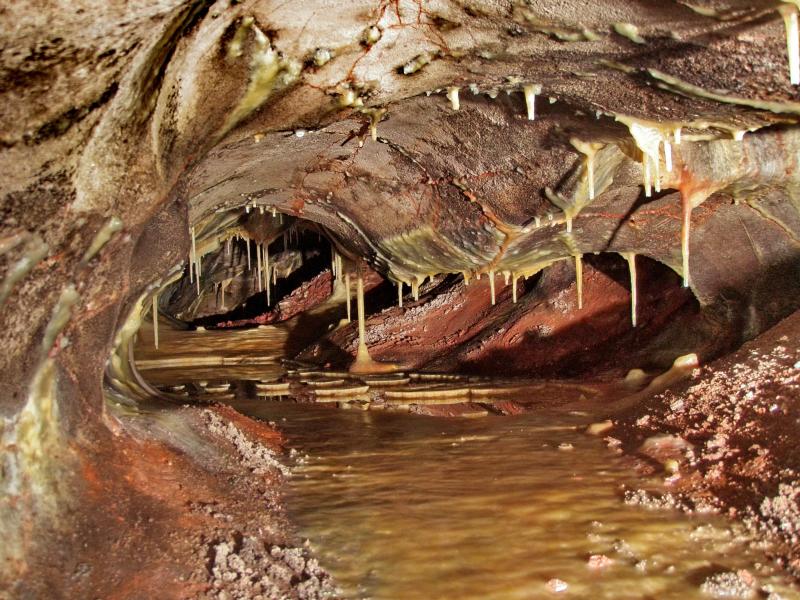
Skyway Lake, stalactites, Wind Cave 
"Skyway Lake with Stalactites in Wind Cave" National Park Service Photo
Wind Cave National Park in western South Dakota is yet another National Park established by President Theodore Roosevelt. The park, designated in 1903, is the eighth in the system and the first cave park in the world. Located 10 miles north of Hot Springs, it has 140.47 miles of explored passageways with more discovered each year. The photographs on the National Park Service site are spectacular. It must be a cave explorer's dream place.

The cave was considered sacred by the Lakota who lived in the Black Hills. They believed it was the place where they had first emerged from the underworld. In 1881, Jesse and Tom Bingham were attracted to the cave by the whistling wind sound. Reportedly, the wind was so forceful, it blew off Tom's hat; then days later, when Jesse returned, his hat was sucked into the cave. According to the National Park site, "the movement of the wind is related to the difference in atmospheric pressure between the cave and the surface."

Today, above the cave, bison, prairie dogs, and elk roam among the prairie grasses. While the cave system sounds intriguing, I am too claustrophobic to add Wind Cave National Park to my bucket list. However, Theodore Roosevelt is fast becoming my favorite American President. 

Friday, April 25, 2014

"V" is for Virgin Islands National Park

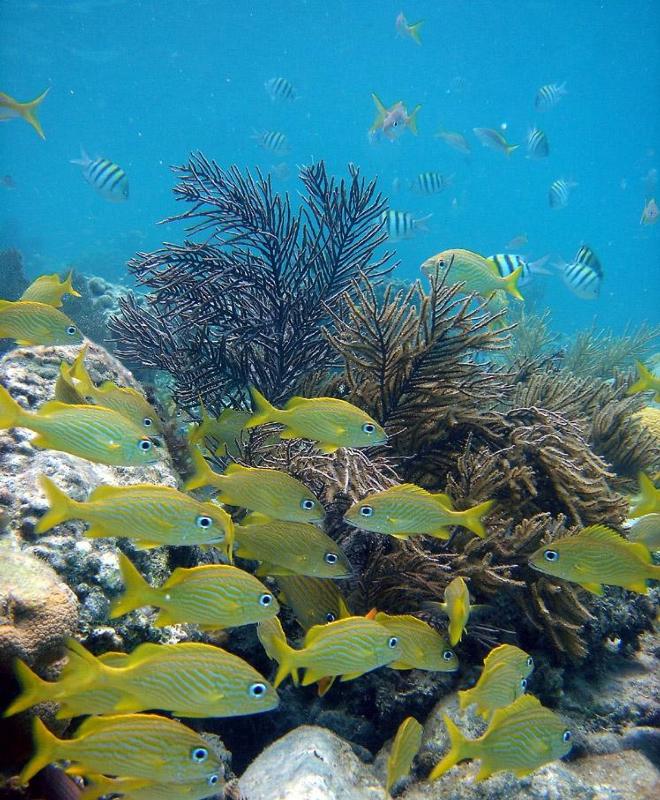
French Grunts
French Grunts - National Park Service Photo

The island of St. John is the location of the 7000-acre Virgin Islands National Park. In addition, the park includes about 95% of Hassel Island  which is the western edge of St. Thomas Harbor. Hassel Island is about 135 acres in size and is 267 feet high.
Years ago, when we visited St. Thomas, we took a catamaran day-long trip to St. John and anchored offshore. The island is a lush-foliage paradise that features glorious beaches, hills, and valleys. Snorkeling and scuba diving are among the park's offerings, along with both short and long hiking trail excursions.
It is interesting to know that important prehistoric sites are located on almost every beach and bay in the National Park. I was unaware that many of these archeological sites date back to 840 BC. I also did not know about the Caribbean rock art found on the island.

There is a park alert currently for "two mosquito transmitted diseases (virus), Dengue, and Chikungunya Fever, now in the Caribbean. Both viruses are transmitted by Aedes species mosquitoes, which have black and white stripes markings." That news is disturbing.

I love the Caribbean islands and am glad the National Parks include the island of St. John. If we visit St. Thomas again, I'll be sure to go explore Hassel Island. I'll also visit the Virgin Islands Archeology Blog which tells about the experiences of some of the Virgin Islands National Park interns.


Hawksnest Bay ©
National Park Service Photo